

This week’s newsletter is sponsored by Ahrefs
Paid subscribers can use this Python script for manually tracking ChatGPT visibility
Competitor identification in search marketing has long been a huge misfire because most teams tasked with a search competitor analysis list their top business competitors and build the report around them, and that approach is wrong. A business competitor isn’t always a search competitor, and a search competitor isn’t always a business competitor, so a CMO's whiteboard list rarely matches what a search engine would.
[Sponsored by Ahrefs]
Most “free” SEO tools are just a seven-day countdown in disguise, requiring a credit card before locking you out of your own data.
Ahrefs Free gives you permanent access to six essential marketing tools so your brand can get discovered across traditional search, AI, and social platforms without a ticking clock.
Sign up for your free-forever account today with no credit card required, and start building sustainable visibility on your own terms.
Check it out here.

A true competitor report should follow the same standard you use for everything else in search: a business KPI. If a business competitor doesn’t have a real search presence where your customers actually look, you shouldn't track them; adding them to the report bloats it and only makes it look thorough. You want competitors in your reports that you are learning from and defending against.
Say you work at Monday.com and Trello’s SEO has been on a downward decline for the last few years. Don’t fall into data paralysis by adding them to your overall dashboards; focus on ClickUp, Notion, and the other competitors that show up where your customers search. If Trello's SEO changes, you can add them later. I once worked with a financial industry startup that listed the IRS as a competitor. Technically, they were a competitor in search, but the IRS did such a poor job with SEO; this team added them to their report just to sandbag.
Broaden the competitor lens
Similarly, you will have search competitors that take clicks and visibility from you even though they aren’t business competitors, and these belong in your report because you are competing against them in search. Wikipedia is the competitor for almost any website if you focus on non-brand, top-of-funnel keywords; they might not sell the products or services you do, but they can take the clicks you would have received if they weren’t visible.
Recognizing these non-traditional search competitors changes the way you compete. When a direct business competitor beats you on a particular metric, you defend against them by trying to overcome their visibility or value prop once a user lands on your page. However, when a non-business competitor, like a niche publisher, review portal, or aggregator, outperforms you (think Geico trying to beat Forbes), you shift to appearing inside their ecosystem, either through a partnership or digital PR. Knowing who your competitors are lets you position your efforts strategically.
This expands even more with AI because the surface area you have to grab a user’s attention is now much smaller. Instead of ten blue links, you might only have three citations, and those three might not be your classic competitors.
Here is how to build a competitor report on that basis.
Start with products and services instead of the company, because a competitor matters in search only if they appear for a query intent that matters to you. Look at the topics tied to your business KPI, which for many companies is usually a sale, and group them by how close they sit to a purchase decision. Use three or four groups at most, such as bottom-of-funnel topics where someone is ready to buy and top-of-funnel education topics, because competitors change as you move between them, and a single blended list hides that completely.
When I worked with WordPress, they had different competitors at each stage, but their competitor reports focused only on website creator brands. We expanded our search reporting to include small agencies for people looking for development, theme, and plugin sites (advanced users who already had a site), and WordPress bloggers for how-to content.
Once the topic groups exist, do the same thing I just showed you that I did with WordPress. Identify companies that compete with you for each topic and ICP of your business. With those brands, you can build a competitor report using your preferred search marketing tool. Even though overall search traffic has declined, these competitors still share the remaining traffic, so you need to see who is grabbing the most market share.
Now that you have identified your competitors, you can build a table like the one below to guide your strategy in this competitive environment.

The differences with AI
The competitor identification process for AI is the same, but your competitor list may include different names. The sources AI engines cite are a mix of review sites, forums (like Reddit, but not only), blog posts, and documentation/knowledge pages, so the companies you thought you competed against might have swapped and have now outright expanded. When I search for “SEO agencies” in traditional search, I see agencies, whereas LLM results recommend YouTube, media, and even conference pages. This means I need to keep an eye on those sources too to see who they recommend.
Also, you’re no longer tracking search traffic or visibility in your standard tool because you're using a different product. The unit you are tracking is citations and brand mentions rather than search visibility. This doesn’t equate to clicks, so treating visibility the same as traffic would be a mistake.
You can build your own lookup tool, use an agent like GrokBot, or do this manually once a week. (Paid subscribers can use this script to build their own for ChatGPT). Record who is cited and who is mentioned, then watch how that set changes. Unlike search traffic, you don’t need to search thousands of prompts because standard prompts represent users and needs, so phrase order and word choice matter far less. I worked with a company to do this manually, and we covered most of their footprint with only dozens of prompts, versus the hundreds a SaaS tool in this space suggests.
Use the right metrics
Do remember that AI answers CAN vary from one run to the next, so don’t read too much into variance. Generally, LLMs tend to converge on the best answer, so these responses won’t vary as frequently over time. When LLMs work as designed, they recommend the consensus brand rather than the company with the best SEO. If a competitor shows up regularly, track them.
Take the names that keep appearing in your AI results and compare them with your search competitor list. Focus on these competitors. You won’t compete against Reddit and YouTube, but you should pay attention to who they recommend.
Like everything in digital marketing, anchor this competitor report to a real business KPI rather than vanity counts; before you start, define what success looks like in your AI dashboard. What a search competitor report might call aggregate clicks is, in this context, a share-of-voice metric, which is more of a brand metric. The definition and how you structure this should be custom for your business.
Brand surveys should absolutely be part of this, and in the next few weeks, I'll share a guide on how to put these surveys together, written by one of the best survey experts I know. If you aren’t already subscribed to this newsletter, subscribe.
Competitor identification isn't just a box you check when you build a strategy, or something you put at the end of a pitch deck. Identifying the right competitors tells you which SEO/AEO initiatives deserve budget and how you'll differentiate your brand. You don’t need to update your competitors every month, but it shouldn't go stale either. Revisit your competitor dashboard regularly to keep your strategies aligned with the market.
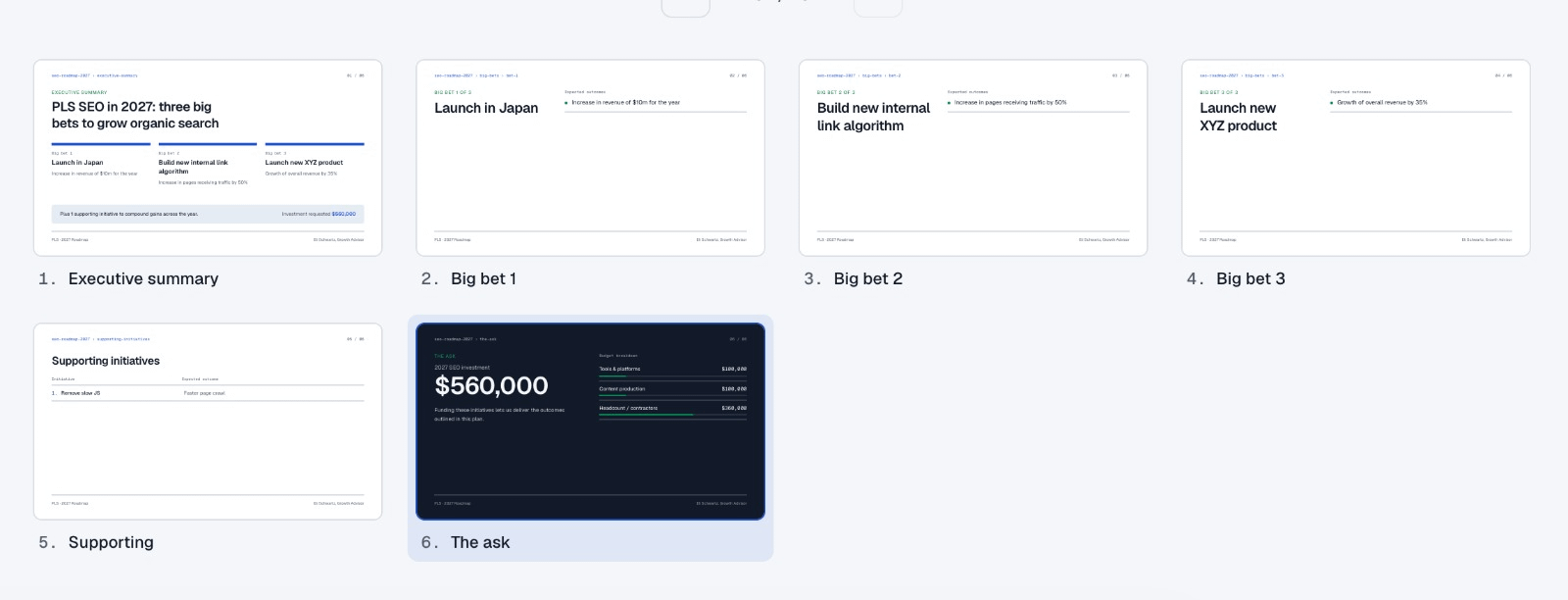
I am building a suite of tools to help SEO teams and need beta testers. The first tool will build a roadmap pitch for budget, and I’m looking for beta testers. Reply to this email if you’d like to try it.
[Sponsored by LLMNTS.ai]
*Citations are the new links. Let’s not repeat the mistakes.*
We’ve spent 20 years learning what happens when link building becomes a race to the bottom. Yet somehow, we’re watching the same thing happen with AI citations. Automated Reddit posts, low-quality listicles, and placements on websites nobody actually reads.
The funny thing is, we have no shortage of tools telling us where brands are missing citations. But who’s actually getting them? SEO points to PR, PR points to the agency, and the agency points back to the client. Everyone agrees it’s important. Nobody owns it.
That’s why the team behind LLMNTS built the service in the first place. They couldn’t find anyone doing it the way they thought it should be done.
LLMNTS.ai works with some of the world’s leading publishers to get brands into the articles and conversations that shape AI answers. It’s the part of AEO everyone talks about, but few actually execute.
*Worth a look if you’re serious about AI visibility beyond the dashboards.*
Check out LLMNTS →