

This week’s newsletter is sponsored by Foundation Marketing and Ahrefs.
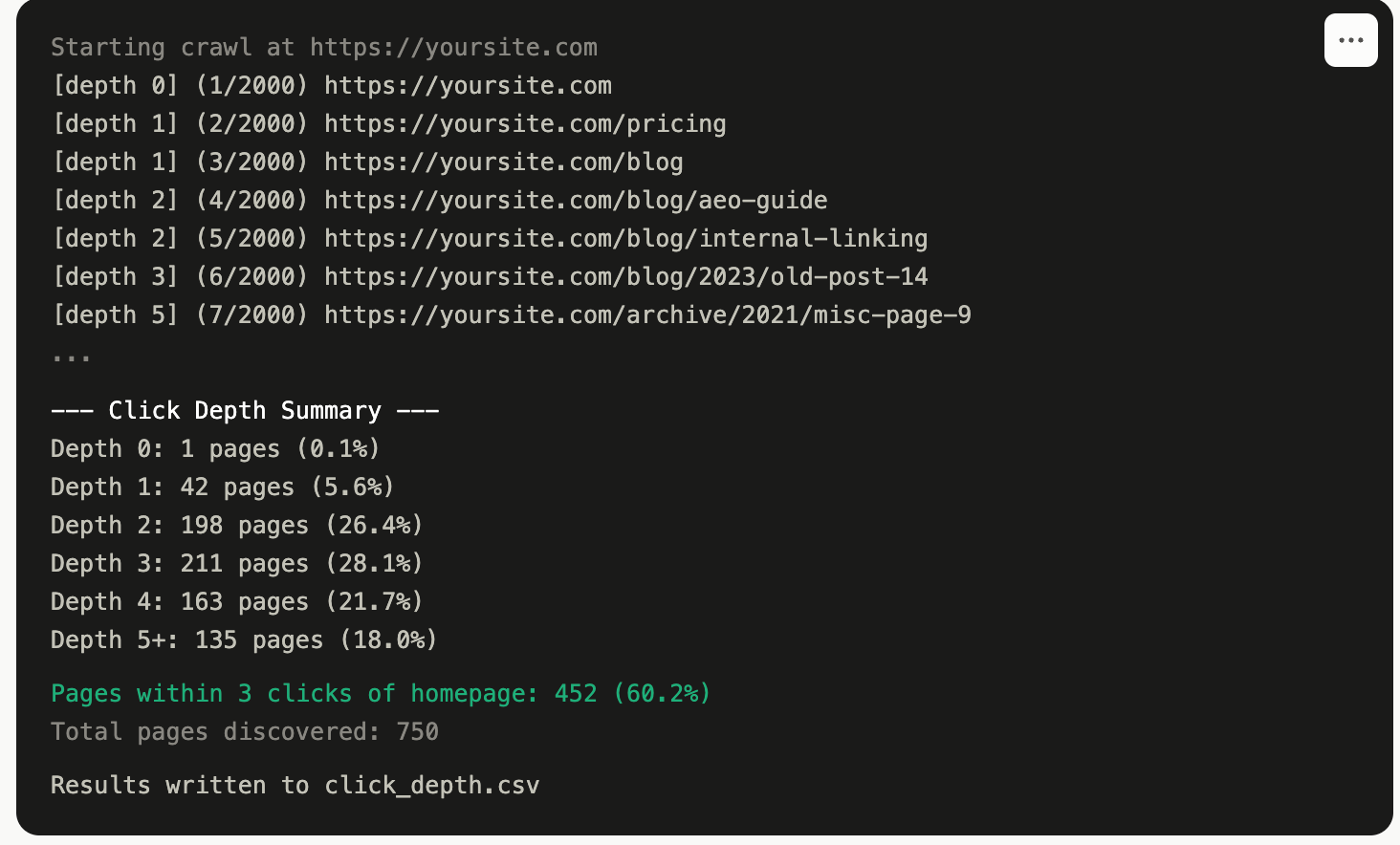
Paid subscribers can download this Python crawler, which calculates the click depth of your pages, and check out this post for my roadmap template.
Much of SEO has changed with the introduction of AI, and link building has not survived the transition unscathed either. I believe most of what passed for link building over the last decade was already obsolete before AI-assisted search showed up. A lot of link building was built around manufacturing signals rather than earning them, and over the last decade, Google has significantly improved its ability to detect and ignore these sorts of links.
[Sponsored by Ahrefs]
Another great new feature launch from Ahrefs.
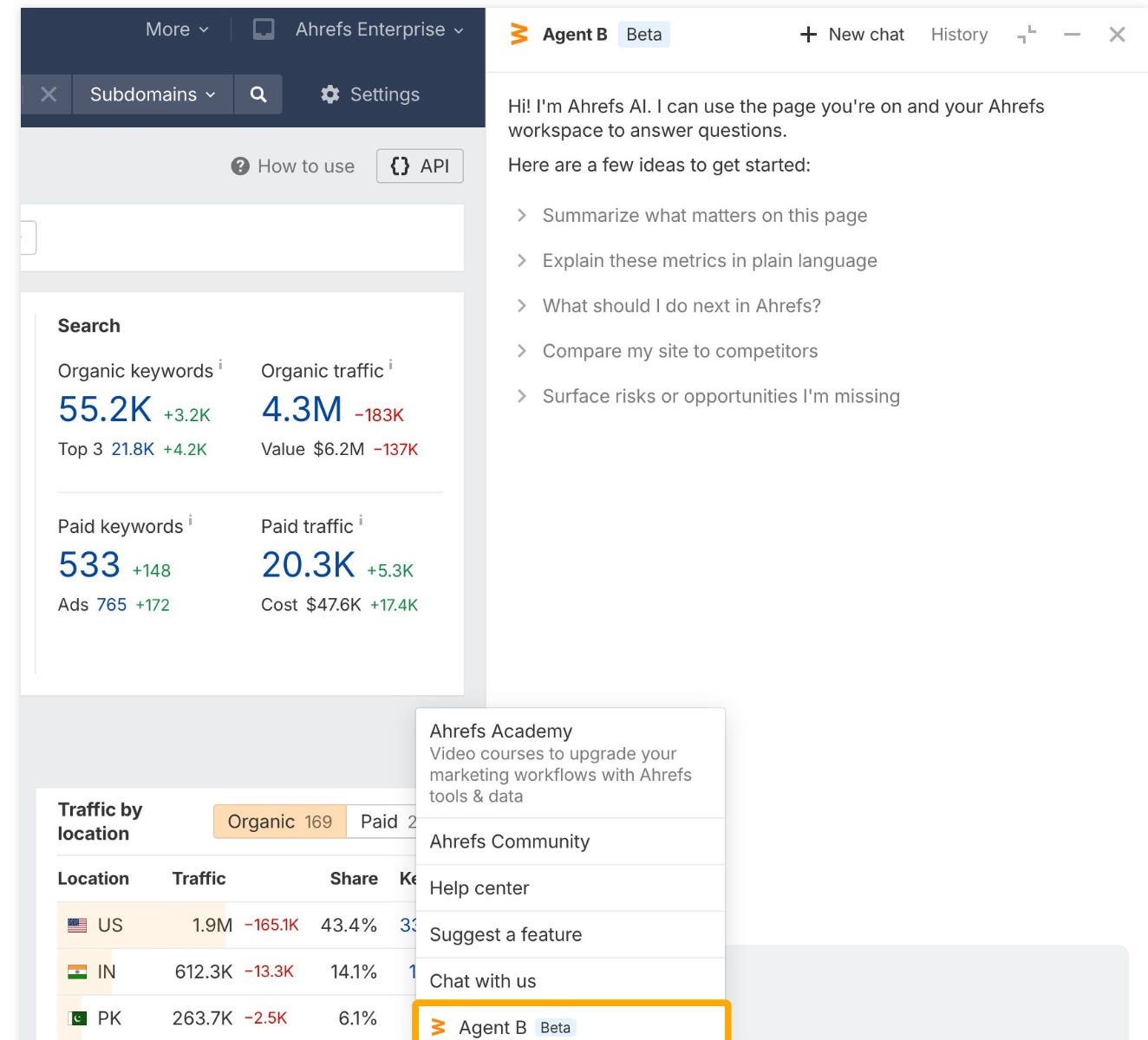
"Ask Ahrefs" is now live and can be accessed on any Ahrefs page.
It reads the page you're on and your whole workspace. So you can ask it to: → summarize what's on screen → compare your site to a competitor → explain why your mentions spiked last week.
It's an agent, not a chatbot. It runs its own API queries, navigates the tools, and applies filters to get the data instead of asking you to.
Free for Ahrefs users while in beta.
Regardless, the discipline of link building done properly is still very much alive, and I will write a future post on what that actually looks like today, but that is a different argument for a different week. What I want to go deep on right now is the category of links that are the easiest to acquire and carry an outsized impact on everything else you are trying to do in SEO: internal linking.
What are internal links?
Internal links are internal references to pages within your site. Writers insert them to get people to read more content, but search engines understand them with the same algorithms they use to understand external links to your site. Instead of building authority from other sites, they build topical authority within a site. They are significantly easier to manipulate and obtain than external links.
Nobody has to negotiate a rate with an outreach agency working off a spreadsheet of domains and hope the receiver on the other end actually responds. You already own every one of these links, and most companies are sitting on far more unused authority than they realize.
Technical SEO has diminishing value in improving a site’s traffic because even a site with terrible structure can do well as the underlying AI in the algorithms will unwind bad best practices. Internal linking is the exception. I have never worked with a large website that couldn’t benefit from better internal linking.
Two reasons internal linking matters
The PageRank logic: every page is weighted by every page linking into it, and those votes are then logarithmically counted to pass authority to a new page. Therefore, a link from your homepage carries more weight than a link buried eight pages deep.
Internal links are how content gets discovered in the first place, by crawlers and now by AI systems trying to understand what your site knows. A page with zero internal links pointing to it is an orphan, and orphaned pages are functionally dead even when they're indexed, because nothing on your own site vouches for them. If nothing on your own site vouches for a page, don't expect an AI answer engine to go find it and vouch for it either. A page can be indexed and functionally invisible at the same time.
Click depth is critical because a page that takes five clicks from the homepage to will be crawled far less frequently than one that is closer to the homepage. My opinion is that any important pages should live three clicks or fewer from the homepage.
How to fix internal linking
Generally, new content constantly links back to old content because you reference the foundational piece, you cite the earlier post, you build on what already exists. The reverse almost never happens. Old content doesn’t get updated to link forward into new content, because that requires someone to remember the old page exists and go do the work. Therefore, authority flows backward in time, while everything published this year sits there starving for the links that would actually help it rank or get cited.
Treat every page as a candidate for cross-linking. This must be built into the publishing workflow to update old pages, or ideally build dynamic logic that automatically inserts links into older pages on a schedule so there’s less manual work to do.
Context doesn’t matter as much as you think
Too many teams aim for context in internal links, which isn’t necessarily bad, but it misses the whole magical point of these links: driving more discovery. Focusing only on contextual relevance creates a biased feedback loop because your most popular topic already has the most content.
Popular links to popular. Niche stays niche forever, because the internal linking logic never gives it a shot.
To fix it, break it on purpose by ignoring context. Inject randomness into the linking logic, and I mean structurally engineered randomness. You can have dynamic logic on a page that inserts new content in a link box, but your logic must link to random pages.
This is obviously not the best editorial link strategy when a page about pricing suddenly links to a product launch blog post from eighteen months ago, but it will work. This needs to be truly random, so every page has a chance to be exposed to internal links.
A massive (millions of pages) site I worked on that did this saw crawl, indexation, and most importantly, traffic improve dramatically within weeks. Pages that had sat flat for over a year with zero internal links pointing to them got crawled again within days of turning on random link injection, and a meaningful chunk of them doubled organic traffic shortly after, without a single word of the content changing.
Server-side only
Ideally, any logic you use to build these links happens on the server because otherwise your links could be invisible to search engines. If your site runs on any JavaScript framework that renders links client-side after the page loads, it’s highly possible that these links will be invisible to crawlers and AI systems. Minimize this risk by making the links render server-side.
How you know it’s working
Once your new link algorithms are in place, pull crawl stats from any log analysis tool and run a crawl to compare your orphan page count before and after. If traffic to old pages starts moving without anyone touching the content itself, you can chalk this up to your linking efforts. Internal linking is the one thing in SEO that you can never invest too much in, so if you are looking for some low-hanging fruit, go pick this one.
[Sponsored by Foundation Marketing]
94% of B2B buyers now use AI when researching software. So who’s AI citing when they look for tools like yours?
Well, it’s usually not you. We analyzed 57 million citations across 50 brands: only 2.2% of citations on early-stage buyer queries pointed to brand-owned domains.
Your SEO, PR, and social don’t fix this on their own. And we’ve learnt over the last 12 months that getting cited by AI is its own discipline. The Hidden Selection Phase report shows where AI pulls its answers from, and what separates the brands it cites from the ones it skips.
Download the report
Getting itchy and instead want to see where your brand stands? Book a call for a free content audit with the leading AI visibility agency for B2B.
Eli Schwartz, your point about authority flowing backward in time is spot on. And to ensure that newly published pieces are linked to older pieces, two things help:
Make it a compulsory part of the publishing process and keep reminding and checking until it becomes muscle memory
Reduce friction in the process of identifying which blogs to link the newly published piece to and where exactly
And for the second step, we have a prompt that works extremely well. Someone shared it on Reddit; all thanks to him.
If you feel your reader would benefit from the prompt, happy to share it here.