

This week’s newsletter is sponsored by Semrush
Paid subscribers can download a brand tracker worksheet to help develop a strategy to make your brand the one LLMs recommend.
I'm building tools like the one above into my toolset, and I am looking for beta testers. Reply to this email to join the beta.
Most of my first conversations with potential clients over the past year have started with the same request: how to get an LLM to recommend them. When a client asked me again recently, I gave the answer I keep repeating in this newsletter and on LinkedIn: LLMs highlight brands, not websites.
Traditional SEO has always been about getting webpages to surface for specific queries. A website could be overall weak compared to competitors, but it could have one strong page that does well for a product category. Even more granularly, a page could do well in search for one query, but if the phrase order changed, it wouldn’t.
[Sponsored by Semrush]
Who owns AI visibility for holiday shopping topics?
Semrush’s Peak Season Positioning study has dropped, exploring the brands showing up in AI responses when shoppers ask about holiday deals and gifts. The analysis of 269 topics across Black Friday, Cyber Monday, and Christmas finds out:
Where specialists rise above the biggest names
Which brand leads in mentions without a single citation
How ChatGPT, Gemini, and Google AI Mode build different shortlists for the same queries
Before finishing with your visibility checklist for final preparations ahead of shopping season.

Replicating this experience in AI is impossible
When a model answers a “best X” question, it doesn't count keyword usage, links, or any other traditional SEO metric; it picks the resource in its dataset that answers the question for that one person asking. It leans on something completely different from SEO best practices. The model looks at the aggregate of signals that shape what a brand or product is and how it will satisfy this user. It’s not the webpage that is surfaced; it’s the company or product.
Becoming this recommendation is so much more about brand building than SEO. Where you can game a result or beat a competitor with strong technical structure or SEO creativity, AEO leaves no room for that.
Discovery is binary
Discovery in SEO is a major technical SEO challenge; in AEO, it becomes more binary. In traditional search, discovery has grades. Search engines may have found a page but not crawled it. Or they may have crawled it, but it hasn’t been widely indexed (in all data centers and countries). Or it may be indexed, but not inserted as a relevant result across all keyword sets. And even when it is fully discovered and indexed, you can improve its position by building internal and external links.
In an LLM world, the models will either know that a brand exists or not. You can test this anytime by prompting an LLM for a recommendation and then asking why it didn't suggest your brand. In almost every instance, it will say it knew of your brand but didn’t recommend it for various reasons. In AEO, there is no discovered but not indexed. The model is fully aware of every brand and website; the challenge is the selection.
Where to invest
Many brands misunderstand AEO and treat it as a modified search engine, which requires a different content approach. Because of this mistake, we have seen an influx of self-included listicles, FAQ content, Schema, and bulleted text. Content is not the driver of AEO; brand is.
LLMs recommend many brands with abysmal web presences. A case in point is nearly every local service provider, restaurant, and even medical professional. When they are the best fit, LLMs recommend them without any AEO best practices in place, and the reason is brand.
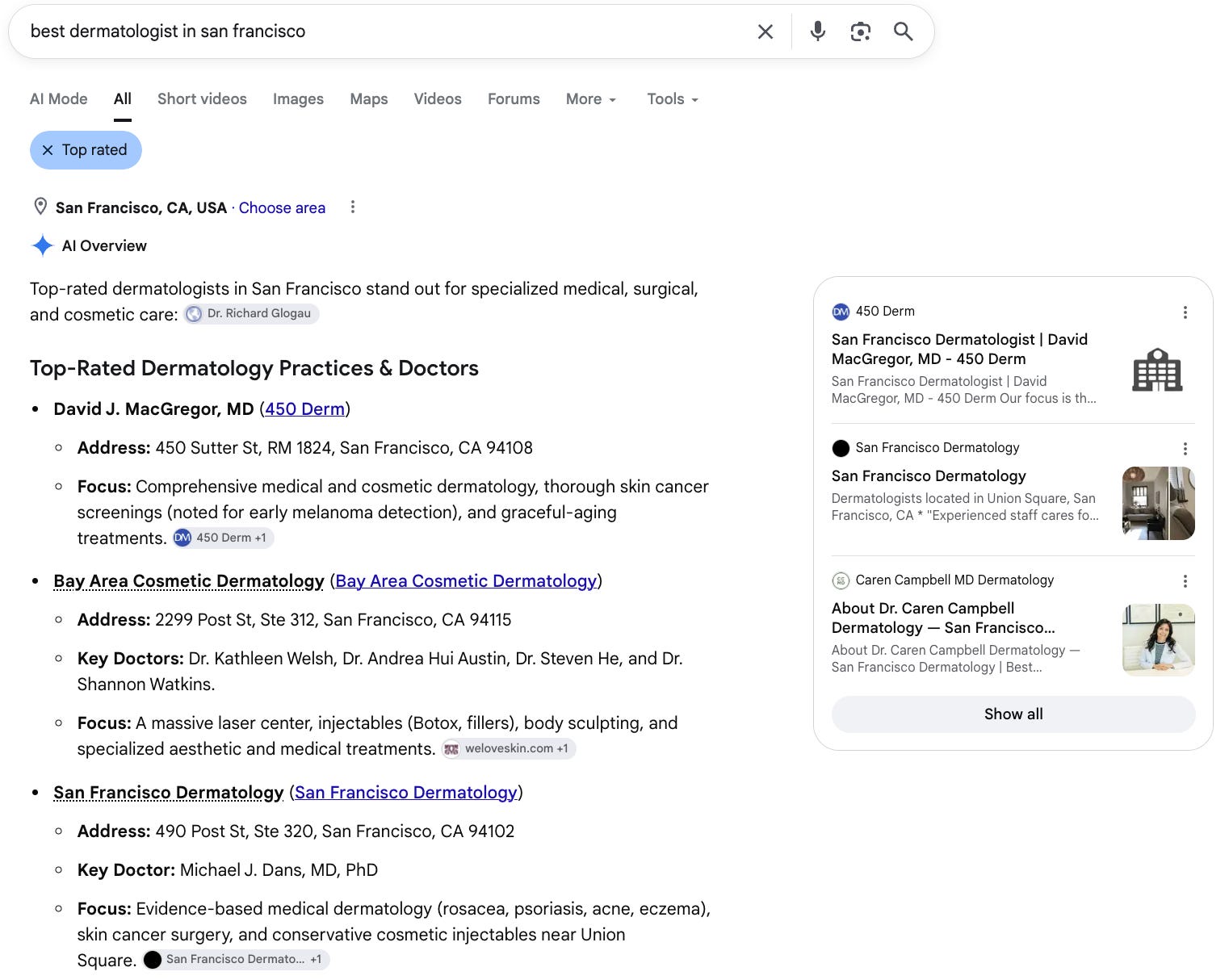
From a user perspective, and why users appreciate LLM answers more than traditional search results, brand evidence has a far higher barrier to entry, which makes it more likely that the brands that clear the bar are actually brands.
All of this hard work of brand marketing sits upstream of content and websites. Brand perception is one of the biggest determinants of whether you appear in LLM answers, and brand grows from customer experiences and your footprint across third-party review sites. Investing in Reddit citations or whatever comes next misses this whole point.
Citations don’t make a brand the recommendation; the invisible footprint of what makes a brand a brand does. This is reputation, trust, word-of-mouth experience, and loyalty. Think of these two examples and try to articulate to yourself why you chose one vs. the other:
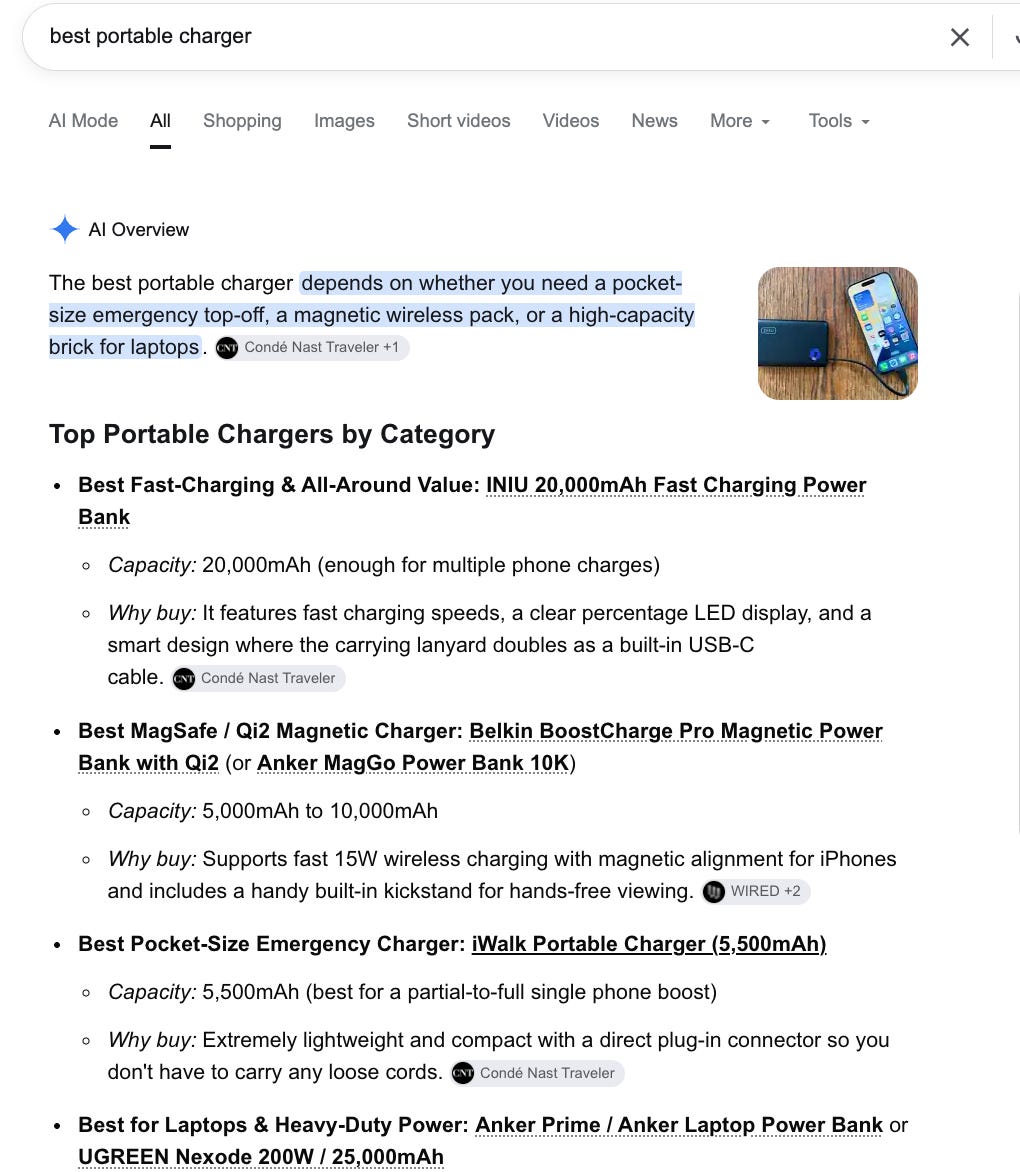
Anker vs. Ugreen. Both are China-founded consumer electronics companies that invested in building brands around what others sold as commodities. You will find their products as the most popular in their category on e-commerce websites, but they are also available for sale at Walmart, Target, and most other big-box stores. I spoke with marketers at both companies and didn’t come away impressed with their SEO efforts, yet their AEO efforts are clearly fantastic.
Dasani vs Aquafina: Which water is better? Both of these products are essentially bottled tap water; neither claims to be spring water, yet they sit on the same shelf for consumers to choose. What would make you choose the other? Is it the logo? The ownership (Coca-Cola vs. Pepsi)? Sports endorsements?
The invisible signals behind these choices are what brand signals truly are, and they should be the AEO investment.
A brand is all-encompassing. Everything is wrapped into brand: packaging, pricing, positioning, advertising. Yet marketers somehow focus only on the easiest to obtain: citations.
Attribution and reporting
The lack of a clear playbook and list of tactics also explains why AEO measurement is such a mess right now. Leaders ask for dashboards to prove AEO is working, but measuring brand is far more complex than running a rankings report.
The same confusion shows up in the language people use. They talk about “optimizing for AI” as if it were a new flavor of technical SEO, which is how everyone got so excited about llms.txt, and everybody wants a silver bullet. There is also an internal reason this keeps failing, and it has little to do with strategy. The work lands on SEO teams because AEO has “xEO” in its name and they already own search traffic, but the real levers, which are third-party reviews, PR coverage, community reputation, and customer advocacy, sit inside brand and communications. Asking an SEO team to fix a trust problem hands the right problem to the wrong people, and then the company wonders why the dashboard never moves.
Think like your customer asking for your product, then ask what a model would find if it looked for proof you deserve the recommendation. Build the reputation, and the recommendations follow; skip it, and no clever prompt-shaping copy will get you where you want to be.
Once you are building, build for the user. Don’t fake it.
[Sponsored by LLMNTS.ai]
*Citations are the new links. Let’s not repeat the mistakes.*
We’ve spent 20 years learning what happens when link building becomes a race to the bottom. Yet somehow, we’re watching the same thing happen with AI citations. Automated Reddit posts, low-quality listicles, and placements on websites nobody actually reads.
The funny thing is, we have no shortage of tools telling us where brands are missing citations. But who’s actually getting them? SEO points to PR, PR points to the agency, and the agency points back to the client. Everyone agrees it’s important. Nobody owns it.
That’s why the team behind LLMNTS built the service in the first place. They couldn’t find anyone doing it the way they thought it should be done.
LLMNTS.ai works with some of the world’s leading publishers to get brands into the articles and conversations that shape AI answers. It’s the part of AEO everyone talks about, but few actually execute.
*Worth a look if you’re serious about AI visibility beyond the dashboards.*
Check out LLMNTS →